
Ensure continuous governance of your AI systems
Automated real time policy enforcement and continuous monitoring of AI products are absolutely critical in order to manage your emerging AI risks. Naaia provides up-to-date frameworks for full compliance at any time.
Évaluez votre conformité
Point-in-time audits are over
-
 +2,000 ongoing legislative processes worldwide
-
 Several new adopted regulations every year
-
 European Harmonised norms expected to start landing in 2026
Acceleration of regulations worldwide
-
 Due to the AI technological evolution pace, regulations need to keep up with new risks, AI agents, shadow AI…
-
 Competent authorities provides new guidelines that can have an impact on your compliance and risk management plans
The existing regulations keep evolving
-
 AI products need to be monitored in real time : security, post market monitoring, robustness…
Monitoring needs to be continuous
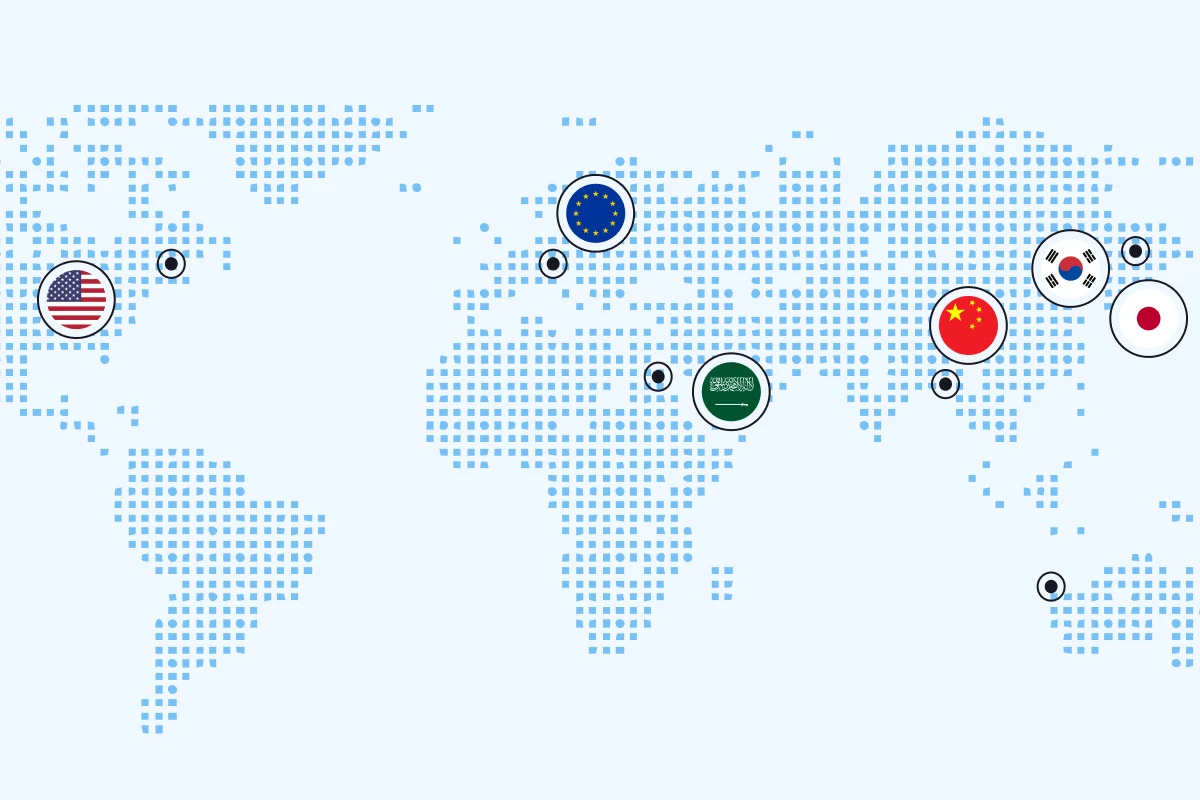
Automatically updated as new frameworks evolve and emerge
Our team of experts closely monitor the evolution of regulations, addition of norms on the worldwide market. As soon as a new regulation becomes applicable, or when an existing regulation evolves, we update our platform with impact on actions, obligations, templates, help texts, agents… You don't have to worry – we make it work so that you are ensured to be fully compliant at all time.
AI vigilance to support oversight
Our post market monitoring platform has been designed to ensure the feedback from users, partners, distributors on the risks posed by the AI systems.
Get a demoWith Naaia
Your evidence is always the right one
Register all your AI products (AI systems, models, components) within the Naaia platform.
You get alerts on risks born by the product
Naaia provides you with a detailed assessment engine to qualify the operator status and the level of risk of each AI asset of your portfolio.
A new regulation? Not a problem
As soon as an AI regulation occurs in a country where your AI product is being used, you get an alert to start building your compliance plan
Ready
for audit
You can open an access to your internal or external auditors to share your evidence and show your versioned action plans & proofs.
Trusted by those who build with AI

Naaia enabled us to move toward a more value-driven approach to AI governance. Beyond compliance, the platform helps us prioritize AI initiatives based on business impact, risk, and strategic value.

Colas naturally selected Naaia for its intuitive user experience, as well as its educational and thought-leadership approach to simplifying complex AI topics. A truly collaborative framework was established throughout the project, driving stronger team engagement, seamless adoption, and operational efficiency.

We chose Naaia for its clear framework to inventory and govern our AI initiatives. We particularly appreciate the combination of its user-friendly tools, which make compliance more accessible, and the supportive guidance from their team.
Naaia helped us operationalize AI Act readiness across our regional authority’s services with a clear and trusted governance framework. The platform improved collaboration between departments and gave us the visibility needed to scale AI responsibly.
Naaia provided the structured, collaborative approach our organization needed to turn complex regulatory requirements into clear, actionable steps for our teams. As a provider of high-risk AI systems, we relied on Naaia as a trusted partner, whose genuine support enabled us to rapidly operationalize our compliance program.
Learn about other use cases
Frequently asked questions
-
Why is continuous monitoring critical for AI risk management?
AI systems are not static — they can change in ways that affect their risk profile without any deliberate modification. Model drift (gradual degradation in performance due to changes in real-world data), concept drift (shifts in the underlying patterns the model was trained to recognize), and changes in how users interact with the system can all create new risks over time. The EU AI Act Article 9 explicitly requires post-market surveillance for high-risk AI systems precisely because static compliance at deployment is insufficient. Continuous monitoring ensures that risks identified at deployment remain managed, and that new risks emerging from system evolution are detected and addressed promptly.
-
What does a robust continuous AI compliance program look like in practice?
A robust continuous AI compliance program has five components:
(1) A live AI system inventory reflecting the current state of each deployed system;
(2) Automated monitoring tools flagging deviations in model behavior, output quality, or usage patterns;
(3) A defined review cycle — quarterly for high-risk systems, annually for lower-risk — with documented outcomes;
(4) An incident management process that captures, investigates, and learns from AI-related failures;
(5) A regulatory update mechanism translating new guidance into updated governance requirements within a defined timeframe.
Organizations that build these five components into their operational routines sustain governance quality over time.
Naaia continuously updates its platform as AI regulations, standards, and governance frameworks evolve worldwide. Organizations receive real-time alerts, updated obligations, and operational guidance to help maintain compliance across their AI systems. -
How should organizations build and maintain an AI audit trail to satisfy regulatory evidence requirements?
An AI audit trail must capture four categories of evidence:
(1) System documentation — technical specifications, risk assessments, and approved use cases at the time of deployment;
(2) Decision logs — records of consequential AI-driven decisions including inputs, outputs, and the model version used;
(3) Change management records — documentation of all system updates, including model retraining, data changes, and configuration modifications; and
(4) Incident records — reports of anomalies, failures, or complaints.
Audit trails must be tamper-evident, retained for a period consistent with applicable regulatory requirements (typically 5–10 years for high-risk AI systems under the EU AI Act), and accessible to authorized reviewers without specialized technical knowledge.
Naaia centralizes and versions AI governance evidence to help organizations strengthen traceability, accountability, and audit readiness over time. -
How can organizations stay prepared for AI audits?
AI audit readiness requires four ongoing practices: First, maintain a current and complete AI system inventory — auditors will immediately test whether organizations know what AI they have deployed. Second, keep all documentation up to date — technical documentation, risk assessments, and training records should reflect the current state of each system, not their state at initial deployment. Third, conduct internal mock audits at least annually, using the checklist of obligations applicable to each system, to identify documentation gaps before a regulator does. Fourth, designate a named AI governance officer with the authority and information access needed to respond to regulatory inquiries within mandated timeframes.