
Structuring compliance across AI impact and scale
With Naaia, turn regulatory complexity into a clear, automated action plan by identifying your AI category, understanding your obligations, and structuring your compliance processes.
Assess your complianceA new framework built on trust
Korea's AI Basic Act applies to any conduct, including from abroad, that affects the domestic market or users in Korea, covering business operators both developing and using AI across its lifecycle.
The law is built around three core expectations:
– Transparency, requiring users to be informed when products use high-impact or generative AI and AI-generated content to be clearly labelled.
– Safety, requiring risk management plans, human oversight, and documentation for high-impact and high-performance systems.
– The protection of fundamental rights, giving affected persons the right to a meaningful explanation of AI outcomes.
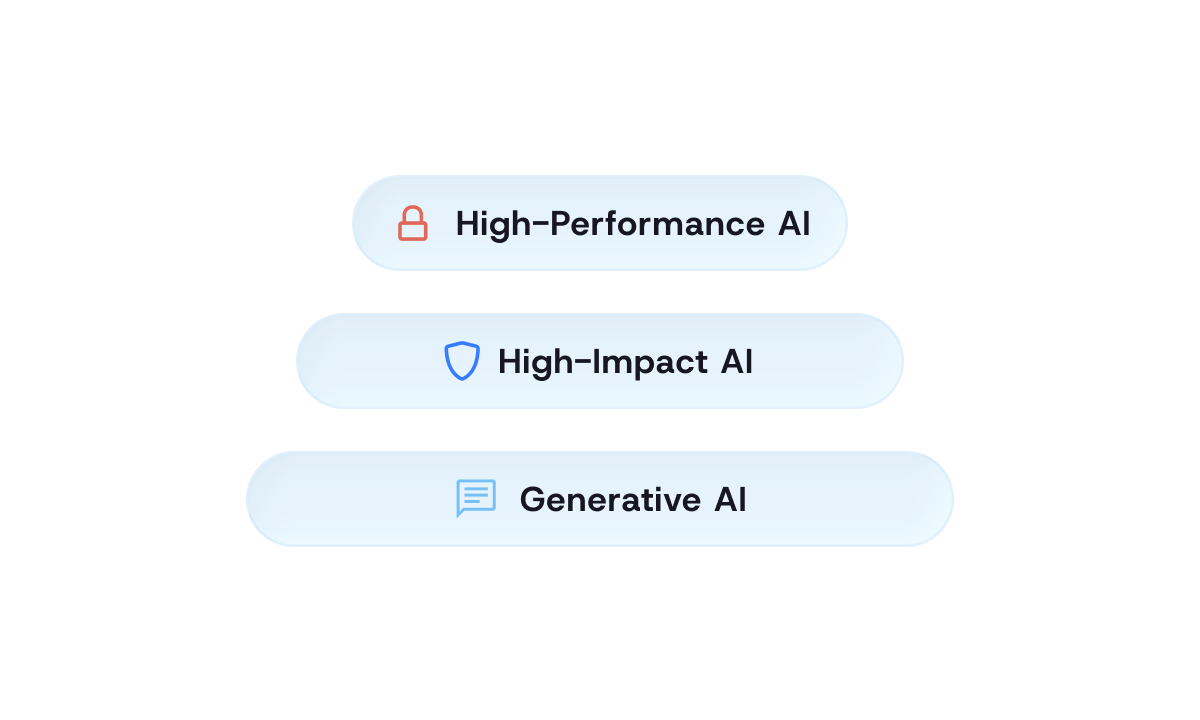
Which AI systems are concerned?
The law defines obligations for all AI business operators, with requirements scaling to the nature and impact of the AI involved.
Generative AI systems face transparency obligations, while high-impact AI — deployed in sectors such as healthcare, transport, or employment — carries stricter requirements around safety, explainability, and user protection.
High-performance AI systems, defined by their scale and potential for broad societal impact, are subject to the most demanding safety obligations of all three categories.
What is the cost of non-compliance?
The AI Basic Act combines regulatory oversight with operational accountability. Authorities can issue corrective or suspension orders for AI systems that pose risks, directly impacting business operations.
Administrative fines of up to 30 million KRW may apply for failures such as lack of transparency, absence of a local representative, or non-compliance with safety obligations.
For international companies, compliance also includes managing extraterritorial obligations and appointing a local representative when thresholds are met.
With Naaia
Map your AI landscape
Identify high-impact, high-performance, and general AI systems across your organization.
Qualify your regulatory exposure
Understand your obligations based on AI category and usage context.
Build your action plan
Generate a clear, structured compliance roadmap tailored to your AI systems.
Stay
audit-ready globally
Manage transparency, documentation, and international compliance requirements in one place.

Learn about other regulations & norms


Frequently asked questions
-
What types of AI systems are classified as high-impact AI under South Korea's AI Basic Act, and what obligations apply?
South Korea’s AI Basic Act classifies as “high-impact AI” any systems that may significantly affect individuals’ lives, physical safety, or fundamental rights when used in certain domains—particularly healthcare, biometric analysis, public decision-making, and education. High-impact systems are subject to fundamental rights impact assessments prior to deployment, transparency requirements (users must be informed when AI is involved in delivering services), and documentation requirements enabling regulatory inspection. Organizations must self-assess whether their systems qualify as “high-impact” and maintain evidence supporting this classification.
-
What are the compliance obligations for international companies under the AI Basic Act?
International companies are subject to the same obligations as local actors when their activities affect the Korean market or users located in Korea. This notably includes transparency, risk management, human oversight, and documentation requirements applicable to high-impact AI systems. Companies without an address or establishment in Korea will be required to designate a local representative once they reach certain thresholds—particularly in terms of number of users or revenue—which will be specified by presidential decree. This representative, who must be established in Korea, will be responsible in particular for submitting risk assessment results, requests for confirmation of high-impact AI status, and assisting in the implementation of safety and reliability measures.
-
What are the penalties and business risks of non-compliance with South Korea's AI Basic Act?
Failure to comply with South Korea’s AI Basic Act may result in investigations, orders for correction or suspension, as well as administrative fines, particularly in cases of non-compliance with transparency obligations, failure to appoint a local representative when required, or failure to comply with a corrective order. The law also provides for criminal penalties in cases involving the disclosure or misuse of confidential information obtained in the course of duties related to the National AI Committee. Non-compliance may also lead to reputational and commercial risks, particularly in regulated sectors and in dealings with public entities.